Sunday, February 19, 2012

Lucerne via Innsbruck and Liechtenstein

The trip from Munich to Lucerne is about five hours with two scheduled stops on the way. Our first stop will be in Innsbruck. Innsbruck is the provincial capital of Tyrol. It has hosted the Winter Olympics twice, making it not only an interesting and beautiful situated city but the "largest ski resort in the alps". It is located both close to Munich and northern Italy making it a must see alpine destination. We will most likely have a quick stop in Innsbruck with time to walk around the old town. There are numerous gift shops and restaurants in this area.

Some of the photo opportunities include the Golden Roof (Late-gothic alcove balcony, with 2657 fire-gilded cupreous shingles. It was built on behalf of emperor Maximilian I), the St. Anna Column (the column, which is made of Tyrolean marble, was created in 1706, in memory of the drawback of Bavarian troops) and the Triumphal Arch (built in 1765 to mark the marriage of Archduke Leopold and the Spanish princess Maria Ludovica).


Our second stop will be in Liechtenstein. The Principality of Liechtenstein is a doubly landlocked alpine country in Central Europe, bordered by Switzerland to the west and south and by Austria to the east. Its area is just over 160 square kilometres (62 sq mi), and it has an estimated population of 35,000. Liechtenstein is the smallest yet the richest German-speaking country in the world and the only country to lie entirely within the Alps. This will likely be another short stop so the bus driver can rest before we reach Lucerne.


Friday, February 17, 2012

Dachau Concentration Camp


Dachau Concentration Camp was the first Nazi concentration camp opened in Germany, located on the grounds of an abandoned munitions factory near the medieval town of Dachau, about 16 km northwest of Munich. 

Opened March 22, 1933, it was the first regular concentration camp established by the coalition government of the National Socialist Party (Nazi Party) and the German Nationalist People's Party. Heinrich Himmler, then Chief of Police of Munich, officially described the camp as "the first concentration camp for political prisoners."

We will be touring the Dachau Concentration Camp while we are in Munich. If you are interested in reading and learning more about Dachau, there are a few sites that are worth visiting prior to our tour.
http://www.holocaustresearchproject.org/othercamps/dachau.html

A web site you might want to check out.
http://www.scrapbookpages.com/dachauscrapbook/index.html.

There are some resources at this site that might be useful.
http://www.dachautour.com/Reasearch%20dachau.html.

Sunday, February 12, 2012

Munich: Home of Oktoberfest

Our next overnight stop will be in Munich. It is approximately three hours from Nuremberg. Munich is the capital of the state of Bavaria and lies near the foot of the German Alps. It is located on the River Isar. Munich started out as a small town enclosed by a wall and then expanded beyond it. The 'inner city' occupies a small area that is easy to explore on foot and you'll get a sense of the original wall because the gates still remain.

Munich was founded (1158) by Henry the Lion, Duke of Saxony and of Bavaria. In 1806 the city was made capital of the kingdom of Bavaria. Munich became a cultural and artistic center and it played a leading role in the development of 19th- and 20th-century German painting.

After World War I the city was the scene of considerable political unrest. National Socialism (Nazism) was founded there, and on Nov. 8, 1923, Adolf Hitler failed in his attempted Munich “beer-hall putsch”—a coup aimed at the Bavarian government. Despite this fiasco, Hitler made Munich the headquarters of the Nazi party, which in 1933 took control of the German national government. Munich was badly damaged during World War II, but after 1945 it was extensively rebuilt and many modern buildings were constructed.

The 1972 Olympic Games were held in Munich. The games were blackened by the hostage taking and subsequent killing of eleven members of the Israeli Olympic team.

The traditional Bavarian foods served in Munich include bratwurst and other sausages, fried potatoes or potato salad, sauerkraut, dumplings and roasted meats such as pork or veal. And no trip to Munich would be complete without trying Apfelstrudel for dessert or a giant pretzel fresh from the oven.

Our visit to Munich will probably include a guided city tour by bus as well as a walking tour of the center of the city. Some of our stops on the tour may include:

1. Munich Residenz


2. Marienplatz


3. Frauenkirche - Cathedral Church of Our Lady


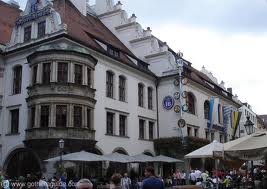
4. Hofbrauhaus


5. The Viktualienmarkt


Check out this video on youtube to see more of Munich:http://www.youtube.com/watch?v=gj9cYPeO5eA&feature=relmfu

Friday, February 3, 2012

The Imperial City of Nuremberg

On our way to Munich we will be stopping in Nuremberg. Nuremberg is a city in the German state of Bavaria, and is Bavaria's second largest city after Munich. It is located about 170 Km north of Munich.
Nuremberg held great significance during the Nazi Germany era. Because of the city's position in the centre of Germany, the Nazi Party chose the city to be the site of huge Nazi Party conventions — the Nuremberg rallies. After Adolf Hitler's rise to power in 1933 the Nuremberg rallies became huge Nazi propaganda events. At the 1935 rally, Hitler specifically ordered the Reichstag to convene at Nuremberg to pass the anti-Semitic Nuremberg Laws, which revoked German citizenship for all Jews.
During World War II, Nuremberg was the headquarters of Wehrkreis (military district) XIII. It was also the site of military production, including aircraft, submarines, and tank engines. Heavy bombing took place in Nuremberg near the end of World War II.
Between 1945 and 1946, German officials involved in the Holocaust and other war crimes were brought before an international tribunal in the Nuremberg Trials.
A walking tour of the old town of Nuremberg may include stops at the Castle and city walls and churches dating back to the 13th century. Shops along the way will be selling gingerbread, a popular souvenir for tourists.


Saturday, January 28, 2012

PRAGUE: City of Bridges and Towers


We will spend two nights in Prague (pronounced Praha in Czech). Prague is the capital city and largest city of the Czech Republic. It is one of most popular travel destinations in Central Europe. It is sometimes called the city of hundred towers but could also be called the city of bridges.

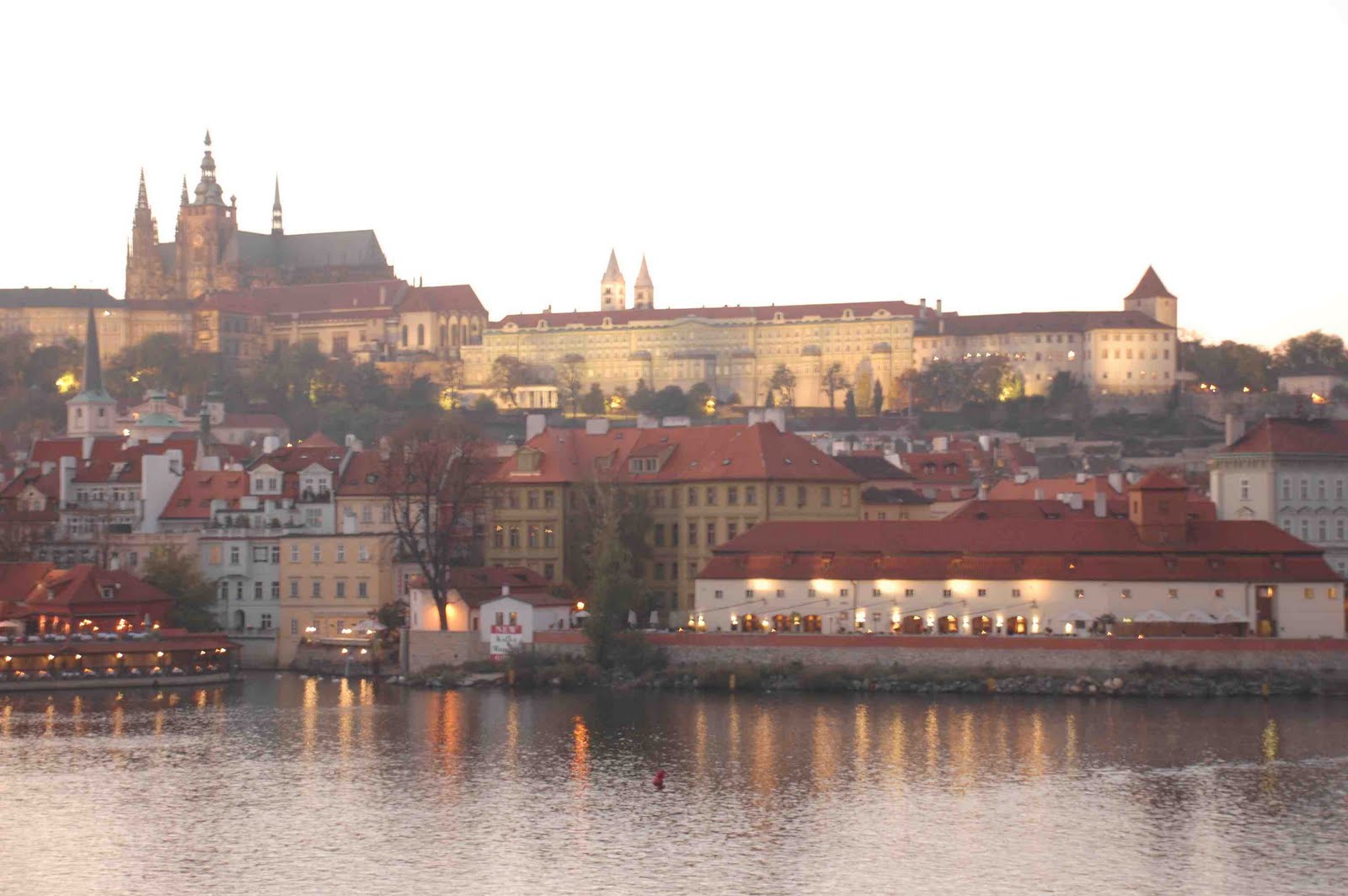
Almost undamaged by WWII, Prague's compact medieval centre remains a wonderful mixture of cobbled lanes, walled courtyards, cathedrals and countless church spires all in the shadow of her majestic 9th century castle that looks eastward as the sun sets behind her.

The official currency of the Czech Republic is the Czech Crown (koruna). Czech is the official language of Prague and the Czech Republic, but English is often spoken in restaurants and stores.

Czech cuisine is typically based around pork or beef with starchy side dishes such as dumplings, potatoes, or fries. Popular Czech desserts include fruit dumplings (ovocné knedlíky), crêpes or ice cream. Street vendors are very common in Prague and they serve Czech style hot dogs and mulled wine from their carts. Small, hollowed-out French baguettes are used for the bread, filled with mustard and ketchup, and then the frankfurter is inserted afterwards. Street vendors also sell Trdelnik, which is a sweet dough rope wrapped around a metal bar, and then spun over a flame until golden, and finally rolled in a sugar and cinnamon and nut mix.

Some sites we will see in Prague include:
1. Prague Castle


2. St. Vitus Cathedral


3. Charles Bridge


4. Wenceslas Square


5. Astronomical Clock


6. Týn Church


Other places we may visit on our walking tour of Prague include : the Golden Lane (near the Prague Castle), Josefov (Jewish Quarter), New Town (Nové město), Lesser Town (Malá strana) which is across the Vltava River from the city centre and leading to the castle. The Lennon Wall, which used to be a source of irritation to the communist regime, is also found here. Petřínská rozhledna, a smaller version of the Eiffel Tower, is on the top of Petrin Hill and can be seen from various view points in the city.

EF tours also has a short video about Prague that might interest you at: http://www.youtube.com/watch?v=kQLsxsfSjBc

Tuesday, January 24, 2012

Dresden: A Quick Stop

We will be traveling from Berlin to Prague by bus. On the way we will be making a stop in Dresden. Our tour director will arrange for a guided walking tour of the city. We will probably also have time for a bit of shopping and lunch.


Dresden has a long history as the capital and royal residence for the Electors and Kings of Saxony.

The city stretches out on both sides of the Elbe River and is embedded in the foothills of the mountains. The Elbe River snakes its way through the city with a length of 30 kilometers. Nine bridges provide crossing points throughout the city. With 62 percent of its area covered by forest and green space, Dresden is one of the greenest cities in Europe.


The historical centre of Dresden is located on the left bank of the Elbe, at the peak of a graceful river bend. Protected for centuries by mighty fortifications, the Saxon capital developed splendour and activity. The city was known as the Jewel Box, because of its baroque and rococo city centre.


In spite of vast destruction during the Second World War, the Old City part of Dresden has preserved or regained fascinating ensembles. The most famous symbol of reconstruction in the city centre is the Dresden Frauenkirche Church, the magnificent baroque dome, which already today dominates the city centre. Many important cultural institutions are situated along the Old City-side of the Elbe banks: from the Old Masters Picture Gallery to the Green Vault, the treasure chamber of the Saxon electors and kings. Shopping and restaurants are also located around the Altmarkt Square and Prager Strasse Shopping Centres.

Wednesday, January 18, 2012

First Stop: BERLIN


Berlin is the capital and largest city in Germany. Central Berlin was badly damaged in the final years of World War II and, therefore, many of the buildings we will see in central Berlin have been reconstructed or planned and built after World War II.

Berlin is a youth-oriented city. It has become a center for art, design, multimedia, electronic music, and fashion among other things. The particularly high number of students and young people in the city has only helped this cause.

German is the main language in Berlin but you can easily find information in English and sometimes in French. Most people under 40 in Berlin are able to speak English with varying degrees of fluency.

Trying new foods is always an important part of visiting new countries. We will be sampling some of the local cuisine such as:
Currywurst is a German street-food specialty that started in Berlin at around the end of the 1940s. It's a sausage, sliced up and slathered with ketchup flavored with curry powder, which comes in varying degrees of heat.
The Wurst or sausages are also served plain, in a bun or with French fries or fried potatoes. We will also been on the watch for men and women carrying large pieces of equipment on which they grill sausages. These special Berlin sausage carriers are mostly known as “Grillwalkers”, and for 1 to 2 Euros you can get a Bratwurst.
German dessert is not something to skip. Whether it's a pie that makes use of local berries, like Black Forest cake, made with chocolate, cherries and kirsch, or cherry liqueur. Or maybe you're more in the mood to tuck into the many forms of kuchen, or cake, like streusel kuchen, which is like coffee cake, or a Berliner, or jelly donut, (known as pfannkuchen in Berlin), or just some really great chocolate or ice cream. 


We will probably have a bus tour of Berlin as well as go on a walking tour of the historical points of interest. Local guides will be conducting the tours. Some of the sites we will see in Berlin include:

1. Brandenburg Gate

2. Reichstag

3. Holocaust Museum/Memorial

4. Check point Charlie

5. Remains of Berlin Wall

6. Potsdamer Platz


You might also like to check out video of Berlin that EF tours has posted at http://www.youtube.com/watch?v=kSdSr6zXZyQ